


Empowering Early Savings for Future Financial Growth
What Are 530A Accounts?
Families now have access to a new tax-advantaged investment account for children under Section 530A of the tax code. Also referred to as “Trump Accounts”, these accounts are designed to give children an early start on long-term saving and investing.
How Do They Work?
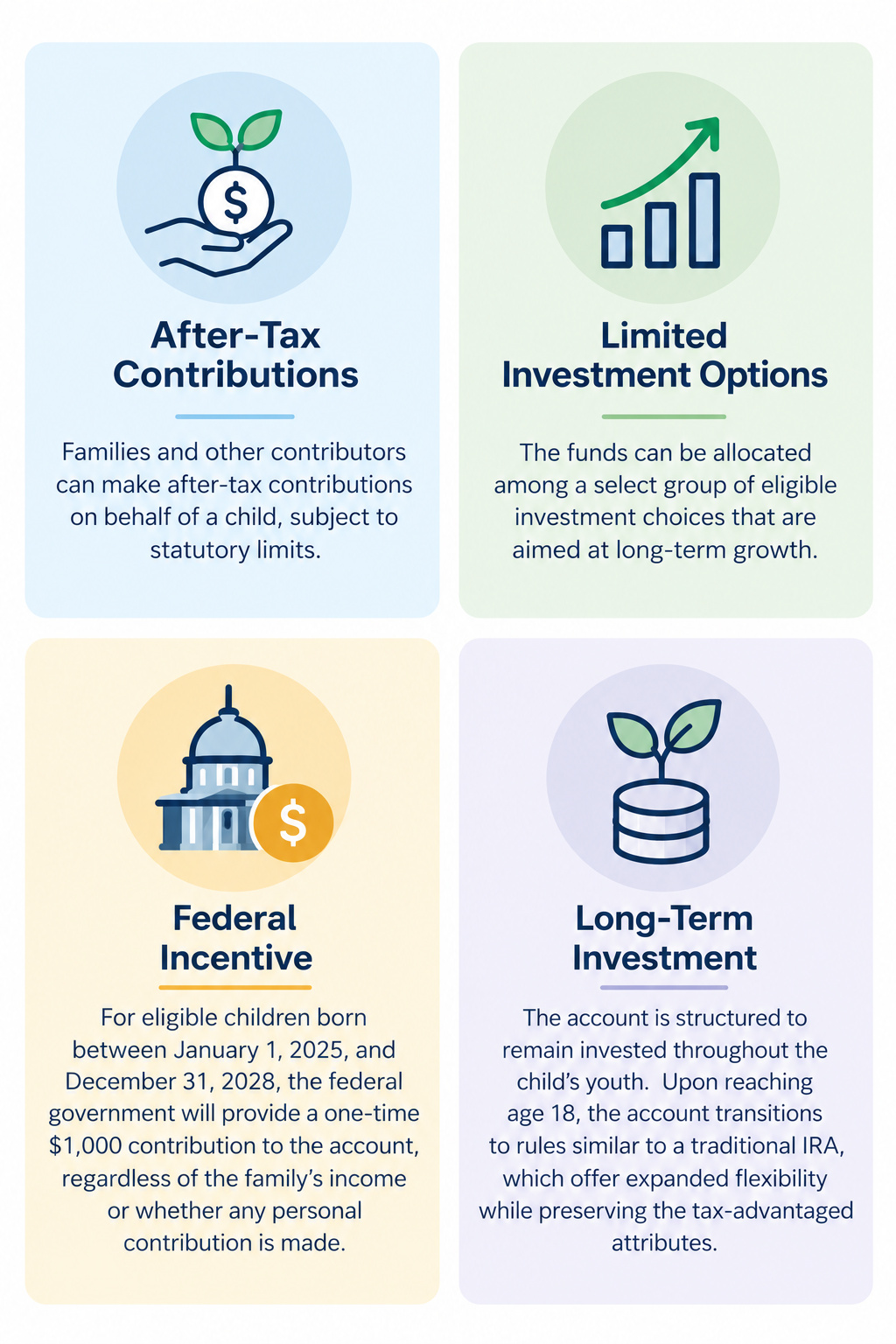
Key Benefits for Families
- Eligibility: Accounts may be opened for qualifying children under the age of 18 - only children born between January 1, 2025, and December 31, 2028, qualify for the federal bonus, making early years critical for enrollment
- No Income Limitations: The federal contribution is available to all qualifying children, irrespective of family income
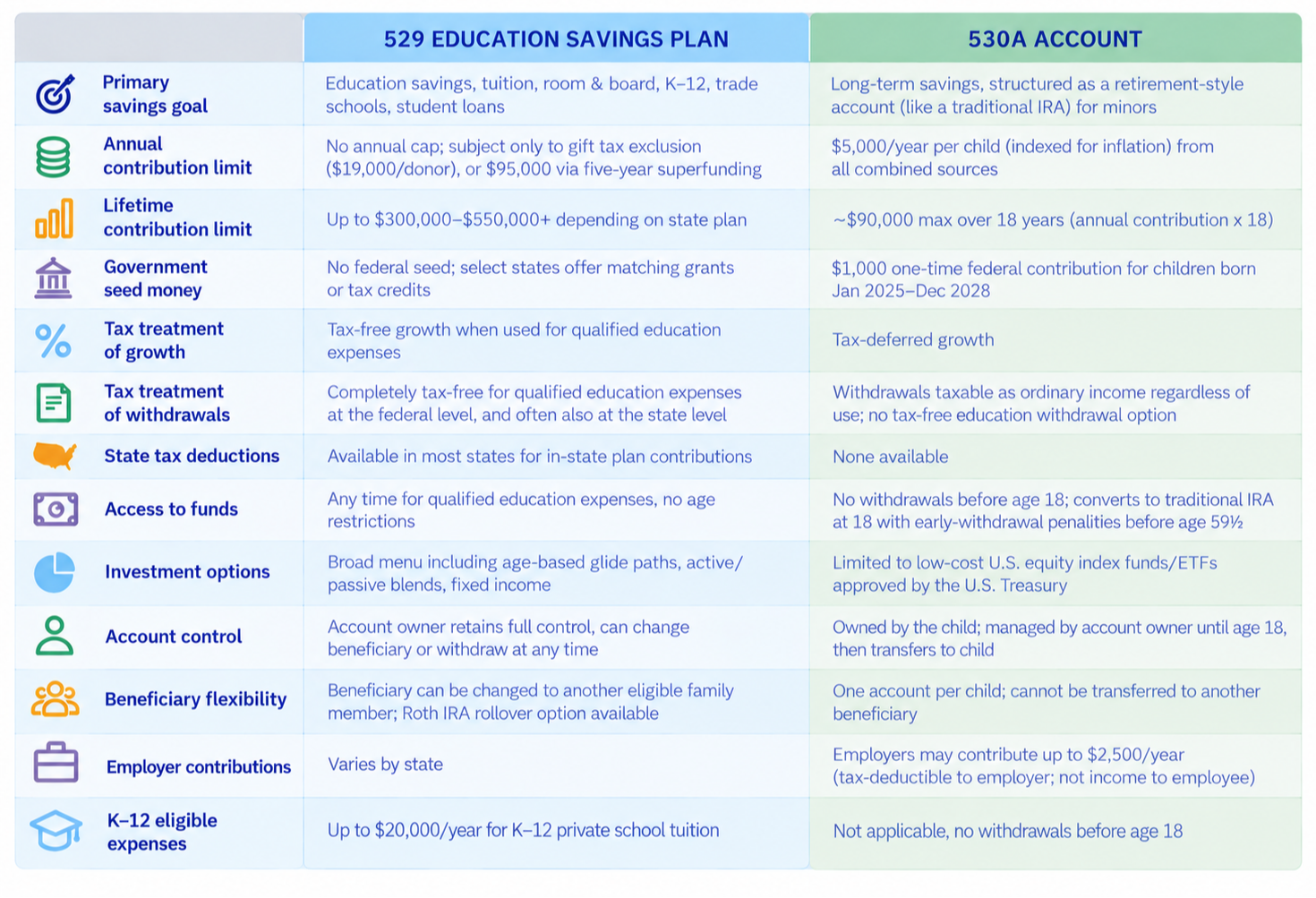
- Flexible Savings vs. Education-Only Plans: Unlike 529 plans that are solely earmarked for education expenses, 530A accounts provide greater flexibility as the child reaches adulthood, serving broader investment purposes
- Long-Term Growth: Starting early with contributions, even modest amounts, can harness the power of compounding, illustrating significant potential for future savings growth over time
529 Education Savings Plans vs. 530A Accounts: What's the Difference?
How to Get Started
Simple Steps to Open an Account:
- Visit the IRS Webpage by clicking here
- Head directly to the IRS webpage dedicated to these accounts at IRS Trump Accounts webpage
- Sign in to Your IRS Online Account:
- Access your IRS Individual Online Account to begin the process
- Submit Form 4547: Complete and submit Form 4547 for an eligible child. The process is straightforward and should take approximately 5 to 10 minutes
Key Takeaways
- 530A accounts offer tax-advantaged opportunities for early savings tailored for children, with a unique federal bonus incentive
- The account structure supports long-term growth and shifts to a flexible IRA-like format at age 18
- This option may be particularly attractive for parents and grandparents keen to start a legacy of financial strength and responsibility early on
Trump Accounts offer tax deferred growth on earnings. Family contributions are made with after tax dollars, and eligible employer contributions may be excluded from the employee’s taxable income. A one time $1,000 federal contribution may be available for eligible children born between 2025 and 2028. Distributions are generally prohibited during the child's growth period and, once permitted, are taxable as ordinary income and may be subject to a 10% IRS early distribution penalty if taken before age 59½. Contribution limits and other restrictions apply, and some rules remain subject to future Treasury and IRS guidance. Consult a qualified tax advisor or financial professional before making decisions.